
DiFFreight2026
An internal operations tool for a logistics team
DiFFreight moves freight across continents. Their operations team plans in Jira and talks in Telegram, and the automation between the two kept growing until it needed somewhere to live. We built that place: an internal tool the team configures itself, runs unattended, and can check when something looks wrong.
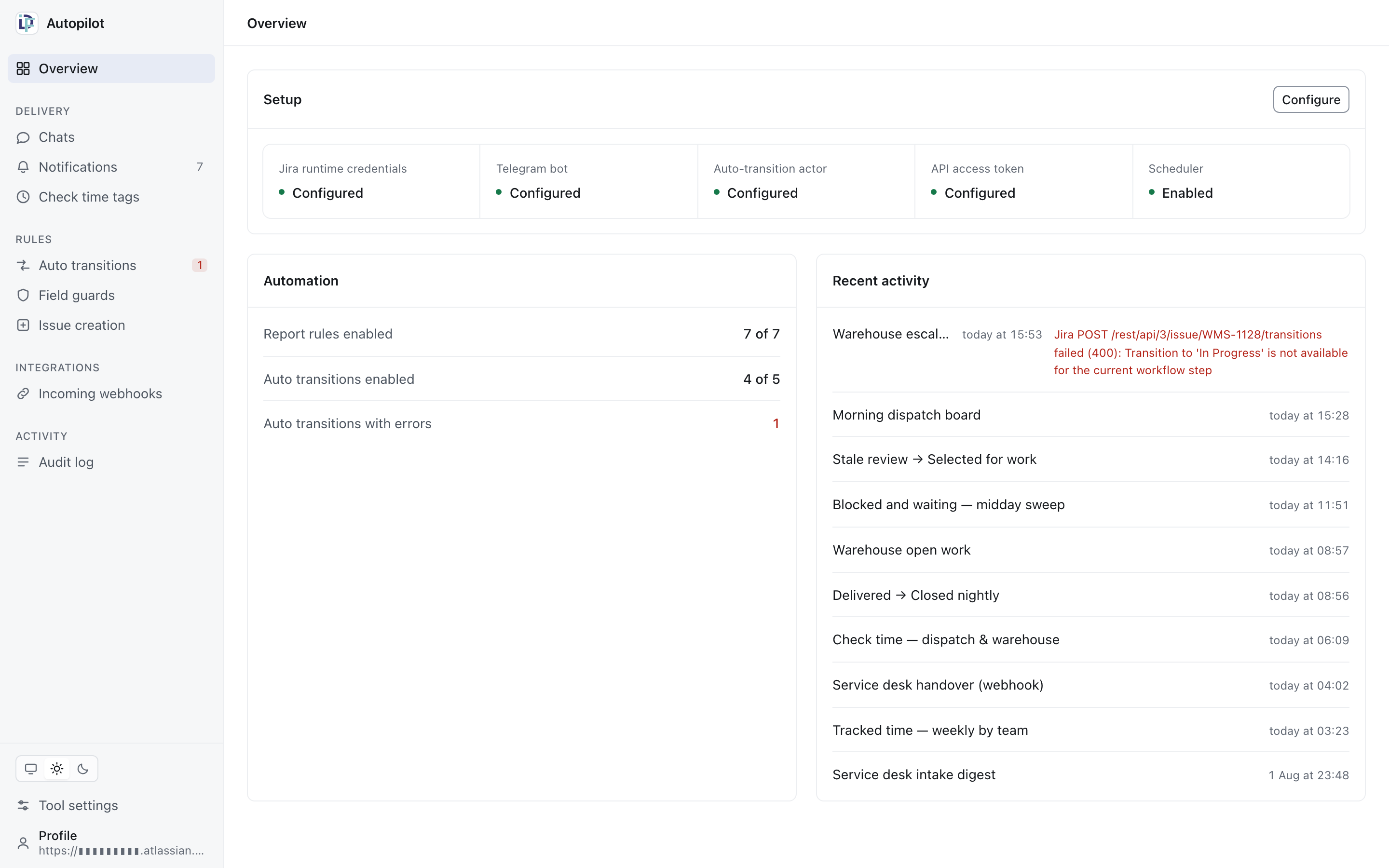
Rules that outgrew where they lived
It began as a scheduled report sender. Rules kept accumulating in places that were awkward to keep track of, spread across Jira’s own automation, hard to review and hard to answer for when nothing happened and nobody could say why. The service became the single place those rules live, with a screen for each kind and one record underneath all of them.
Automation an operations lead can read
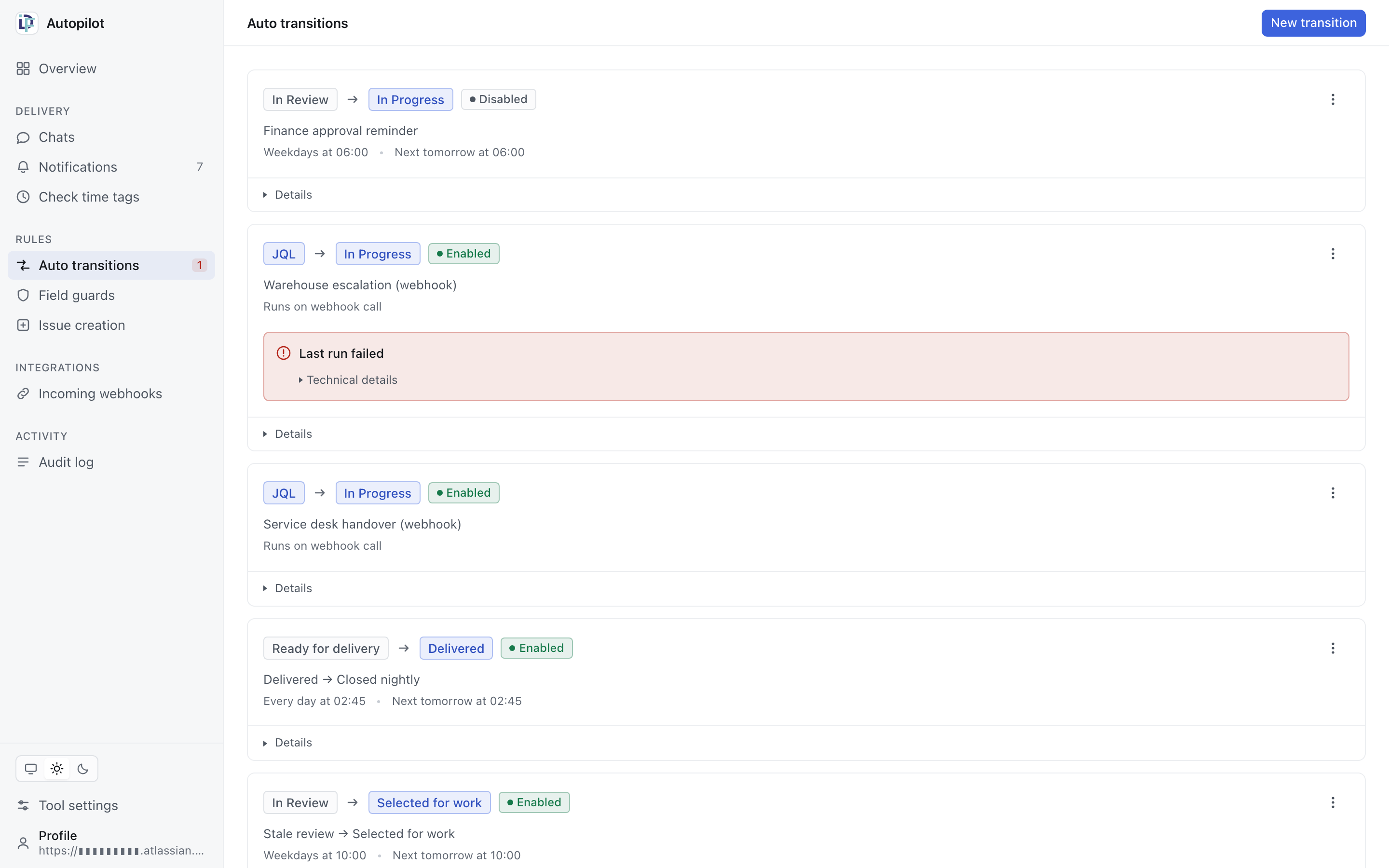
Every rule states itself in one line: which status issues move from, which they move to, what sets it off, whether it is switched on. A rule runs on a schedule, or the moment Jira reports the change that should trigger it. Setting one up means picking projects and statuses from lists rather than writing a query, though a query is still there for conditions that need one.
Reports that reach the right person
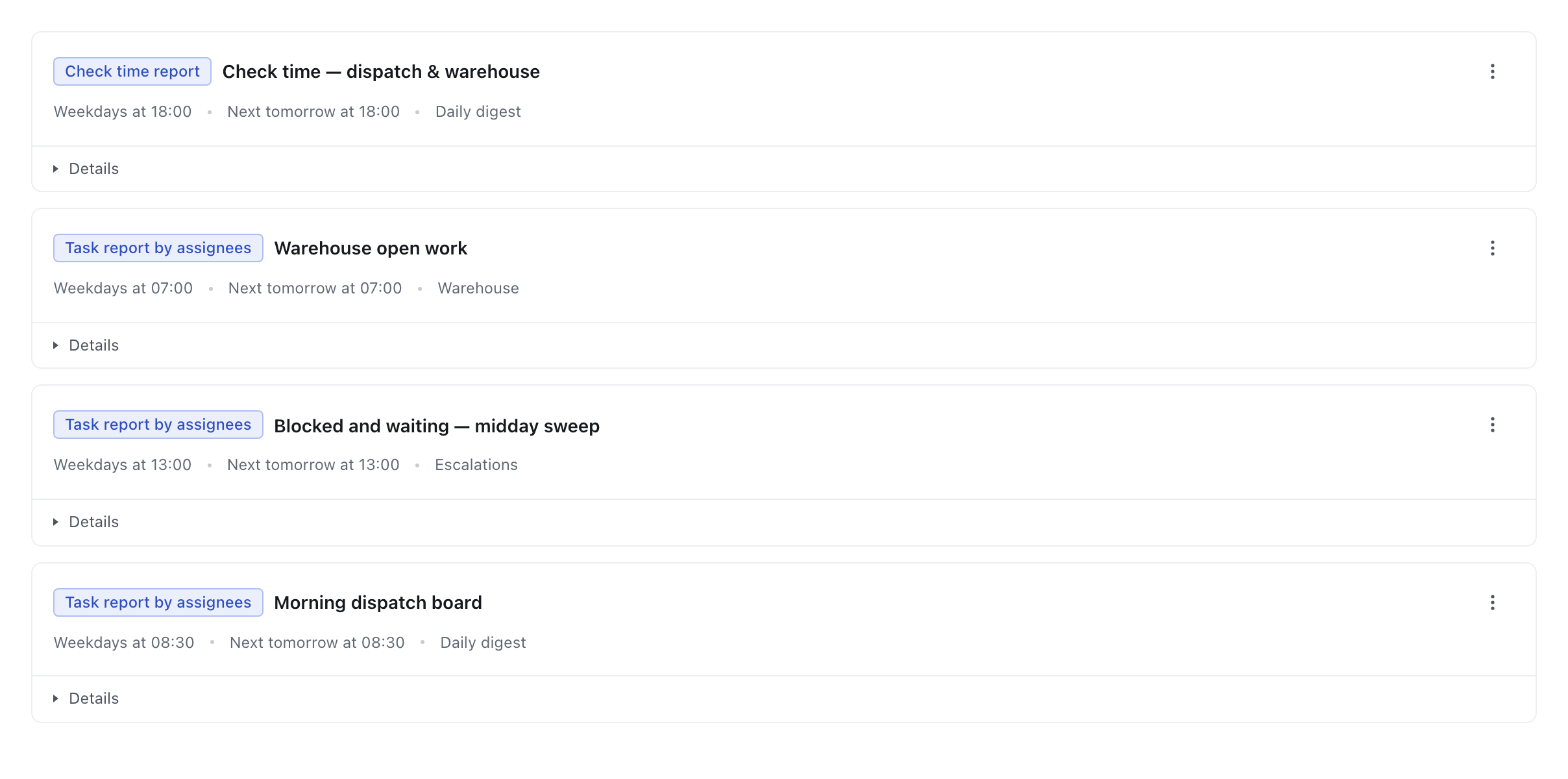
Each Telegram channel carries its own set of reports, and each report says what it covers, when it runs and which topic it posts into: open work grouped by assignee, tracked time by team, a daily check on logged hours. Mentions come from a roster kept in step with Jira groups, so a reminder reaches an actual person rather than a name nobody is watching. It runs the other way too: a message in the intake chat opens a Jira issue without anybody leaving the conversation.
Fields that should not change quietly
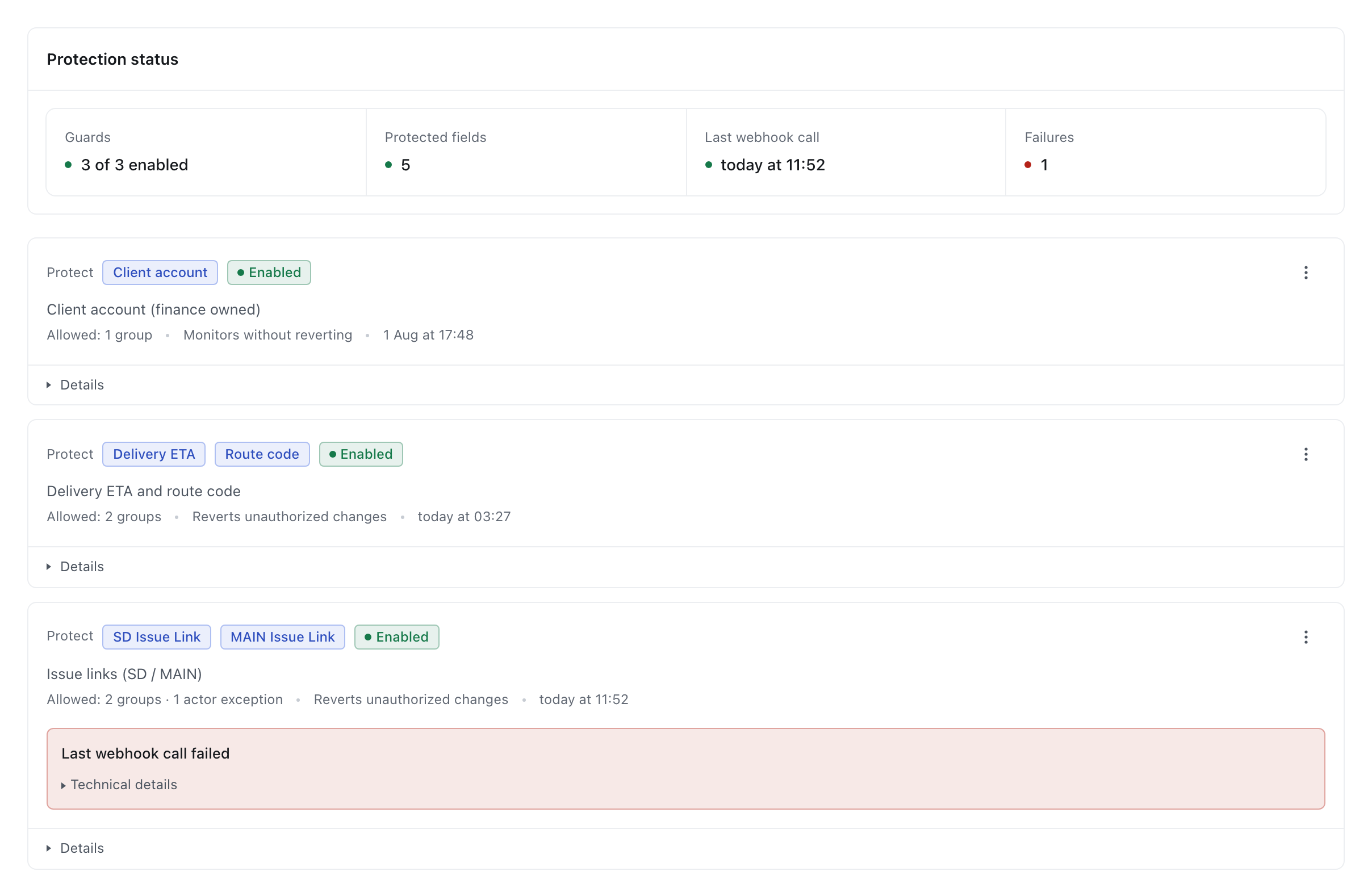
Some fields carry money or a promise to a customer, and a stray edit is expensive to notice a week later. The tool watches the ones the team nominates. When somebody outside the allowed groups changes one, the previous value goes back and a message lands in the chat that cares. Service accounts that cannot sit in a Jira group are listed as exceptions, and a guard can be set to watch without reverting while the team is still deciding.
It tells you when it fails
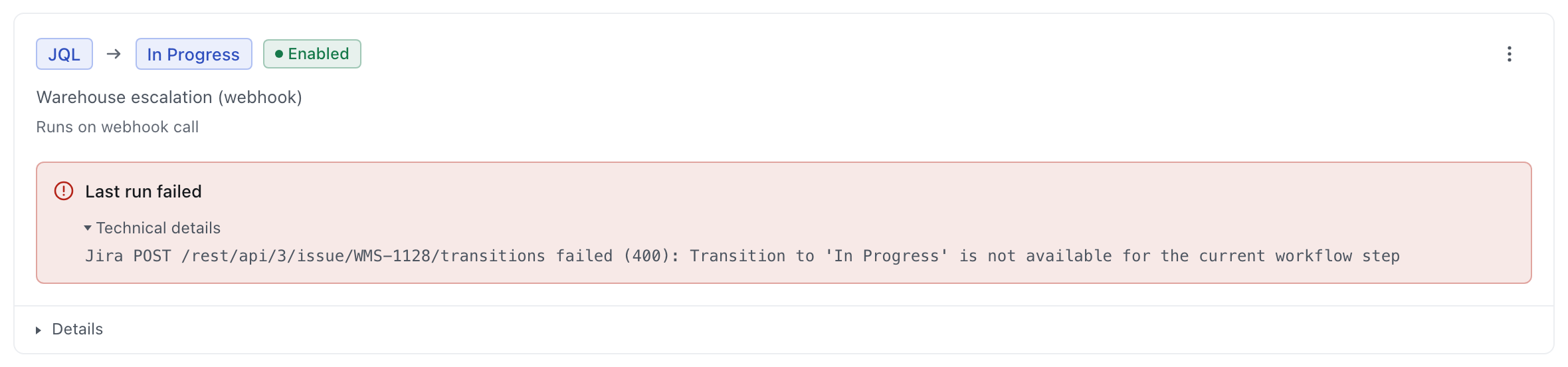
This is the part that matters for something nobody watches all day. A failed run is reported on the first screen, next to the rule that produced it, and what Jira actually said sits one click away instead of in a log file somebody has to go and find.
Nobody has to call us to change it
Everything the tool does is kept and searchable, so a question about last Tuesday has an answer. Beyond that, the operations lead changes a schedule, connects another chat or protects one more field in the interface. Nobody files a ticket with us to move a report by an hour, which was the point of building it this way.
Atlassian, Jira, Confluence and Forge are trademarks of Atlassian. Craftvale Studio is not affiliated with or endorsed by Atlassian.
Your operations, your rules